When you ask a lift company in Bangalore for a quotation, you may hear terms like traction, hydraulic and MRL. These describe how the lift moves. Understanding them helps you ask better questions and avoid choosing the wrong system for your building.
Here is a plain-language guide.
Traction lifts
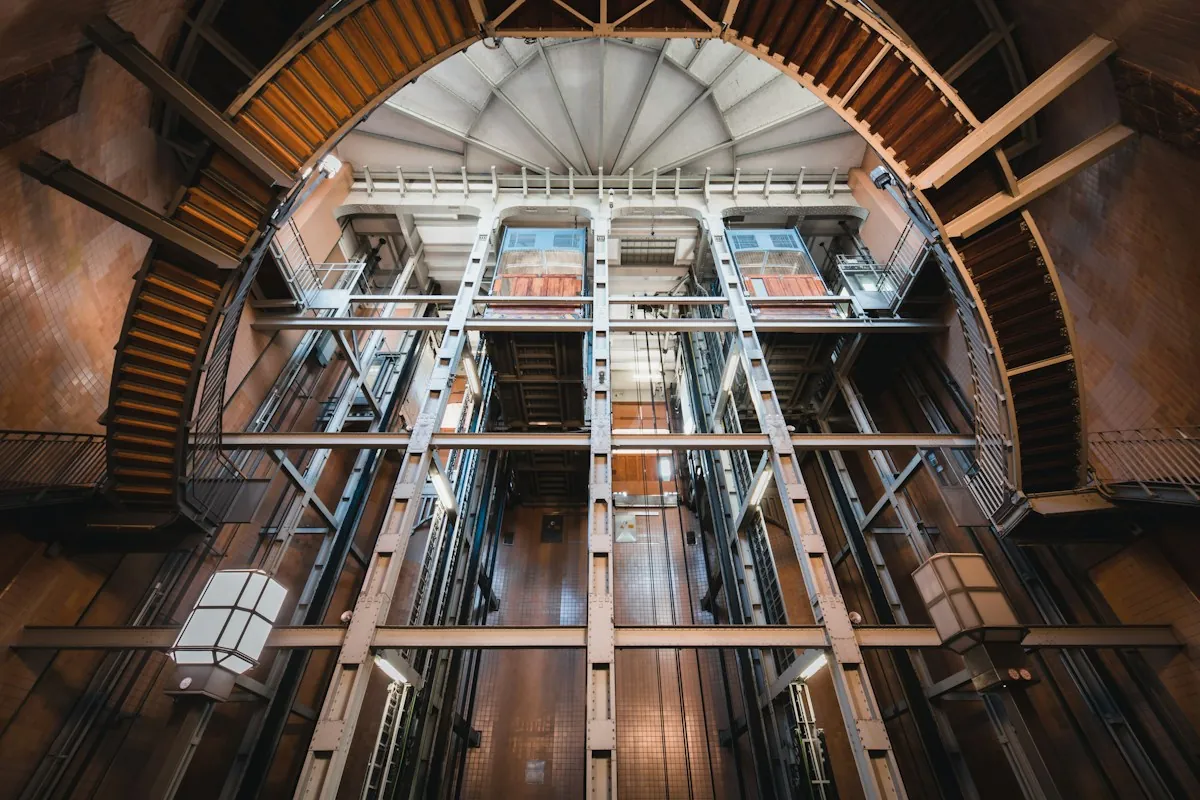
A traction lift moves the cabin using ropes or belts that run over a drive wheel, with a counterweight balancing the load. Traction lifts are common in apartments, offices, hospitals and other multi-storey buildings because they handle many floors and frequent use well. They are usually the choice for taller buildings.
Hydraulic lifts
A hydraulic lift uses a hydraulic system to push the cabin up and release it to lower. Hydraulic lifts are often chosen for low-rise travel, such as a few floors, and for heavier loads in some goods and car lift applications. They can be a good fit where overhead space is limited, but they are generally not used for tall buildings. Ask your installer about energy use and maintenance for the specific model.
Machine-room-less (MRL) lifts
An MRL lift is a lift designed so that the drive machine sits inside the shaft instead of in a separate machine room. This saves building space, which is valuable in cities like Bengaluru where every square foot counts. MRL is a design approach, most often used with traction technology, and it is popular in modern apartments and offices.
| Point | Traction | Hydraulic | MRL |
|---|---|---|---|
| Typical use | Mid-rise and high-rise buildings | Low-rise, some heavy-load uses | Modern apartments and offices where space matters |
| Machine room | Usually needed (unless MRL) | Needs a separate machinery area | Not needed |
| Speed and travel height | Suits higher speeds and many floors | Suits shorter travel | Suits many mid-rise buildings |
| Space saving | Moderate | Depends on design | High |
How to choose
- Count the floors. More floors usually point to traction or MRL traction.
- Check available space. If you cannot spare a machine room, ask about MRL options.
- Think about the load. Heavy loads such as vehicles or freight may suit specific hydraulic or heavy-duty designs.
- Consider maintenance. Ask how each system is serviced and how spare parts are sourced.
- Ask for a recommendation in writing. A good installer explains why a system suits your building.
Match the system to the lift
A passenger lift in an apartment tower, a home lift in a villa and a goods lift in a warehouse may each use a different system. Our guide on lift vs elevator explains the types of lifts, and our checklist for choosing an elevator company tells you what to ask.
Talk to a lift company near you in Bangalore
Need advice on which system suits your building? We will recommend after a site survey. Eider Elevators is a lift company and elevator company in Bangalore with an office in Battarahalli on Old Madras Road. We install lifts and elevators, and we provide lift service, repair and AMC across the city. See the areas we serve, or contact our team for a site visit and quotation.
Key takeaways
- Traction lifts suit taller buildings; hydraulic lifts suit shorter travel and some heavy loads.
- MRL lifts save space by placing the machine inside the shaft.
- Choose by floors, space, load and maintenance, and ask for the reason in writing.